
Pitch Perfect: A Guide to Getting Your News Noticed
A great story is only the beginning of a successful media opportunity. Even when you have newsworthy information to share, how you package and deliver that news to the media makes all the difference.
A strong press release gives journalists the information they need to quickly understand the story, while a thoughtful pitch puts that story into context and gives them a reason to take a closer look.
But in a crowded media landscape, how do you make sure your news gets noticed? Here are a few things to keep in mind when writing your press release and pitching it to the media.
1. Think of the Bigger Story
A new hire, product launch, partnership, event or company milestone may be important to your organization, but that doesn’t automatically make it newsworthy. Think beyond the announcement and about what the bigger story is:
- What does it mean for the community?
- Does it relate to current news or industry trends?
- What impact could this have on customers, the community, or the industry?
- Why now?
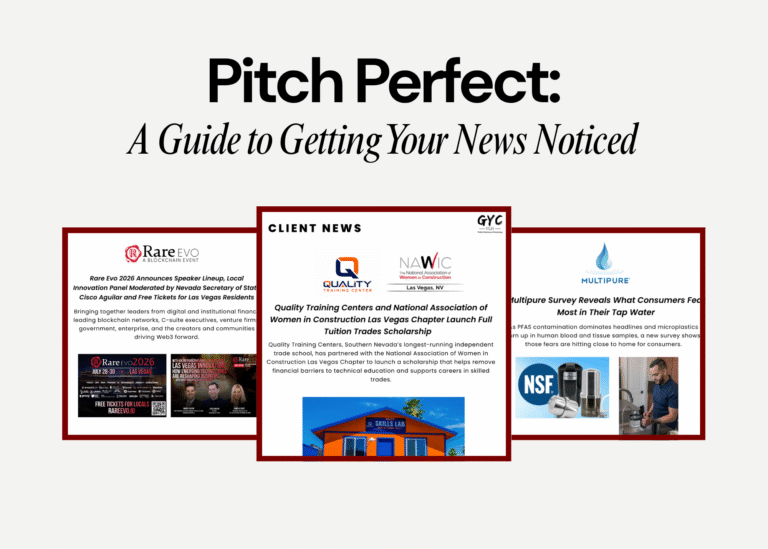
We recently did this with our client, Quality Training Centers. They partnered with National Association of Women in Construction to offer a full-tuition trades scholarship. The press release had to go beyond simply announcing a scholarship to the community, so we focused on the larger impact the scholarship would have: creating greater access to technical education while helping address the ongoing demand for skilled trade professionals throughout Southern Nevada.
Finding that larger angle gives journalists more than an announcement. It gives them a story.
2. Content Matters
From the headline to the final paragraph, your press release should make it easy for a journalist to understand the story. Your headline is the first thing they see, so make it specific, straightforward, and focused on the most important part of the news. Skip the promotional language and get straight to the point.
From there, lead with the most important information. Journalists are busy, and they may only have limited time to skim your release. Put the key details near the beginning rather than making them dig through several paragraphs to find the news.
Use the rest of the release to add the details that help tell the story, including relevant background, quotes, statistics, examples, and context. By the end, a journalist should have a clear understanding of the news and enough information to determine whether it’s a story they want to pursue.
Think of your press release as a resource. The stronger and more complete the content, the easier it is for a journalist to decide what to do with it.
3. Quotes and Stats Are Key
Quotes and data can take a press release from a basic announcement to a story with substance.
A good quote shouldn’t simply repeat what the release has already said. Instead, use it to provide perspective, explain why the news matters, or connect the announcement to a larger issue. Ask what your spokesperson can add that the rest of the release cannot.
Data can provide that same additional layer of context. Relevant statistics, original research and specific examples can help demonstrate why a story matters and give journalists information they can use when building their coverage.
This Multipure consumer survey press release shows how original data can create a clear news angle and give journalists something they can build a story around. When used thoughtfully, quotes and statistics don’t just fill space. They give journalists more to work with and help show why the story is worth covering.
4. Don’t Just Send It, Pitch the Story
Journalists’ inboxes are flooded with hundreds of emails every day, so simply sending a press release and hoping for coverage isn’t enough. A press release provides the details, but a thoughtful pitch gives a journalist a reason to care.
Do your research before reaching out. Know the journalist’s beat, understand their audience, and identify the most effective angle for your story. A personalized pitch shows you’ve done your homework and makes it easier for a journalist to see why your story is a fit.
Don’t be afraid to follow up, either. Even a well-crafted pitch can get lost in a busy inbox. A quick second email or phone call can bring your story back to their attention, especially if you have a new detail, statistic, or an additional source to share.
The goal isn’t to keep emailing until you get a response, but to provide useful information that helps make your story worth covering.
At GYC Vegas, we help brands get their stories in front of the right audiences. Ready to put your next story in the spotlight? Fill out this questionnaire and let’s start building a PR strategy that gets your brand noticed.